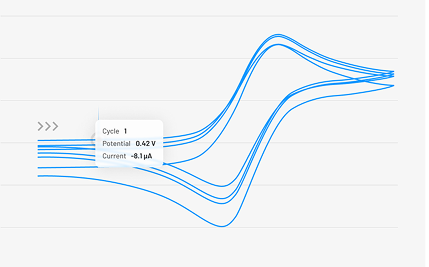
How might we help researchers efficiently find, contribute, and preserve Cyclic Voltammetry (CV) experimental data?
Project Overview
Client: Lin Lab @ Cornell U
0 – 1 Web Application
Duration: 6 months
Team of 2 PrD, 1 Dev
Project Overview
Client: Lin Lab @ Cornell University
0 – 1 Web Application
Duration: 6 months
Team of 2 PrD, 1 Dev
My Role
UI, UX Design
Prototyping
User Research
User Testing
Context
CV is a fundamental technique in electrochemistry. We apply voltage and measure current to understand how compounds behave in reactions. This data is essential for academic & pharmaceutical research. However, there’s currently no way to search or share CV data.
Our client at Cornell University approached us to help design and build an MVP for a centralized CV database.
CV Experiment Process

Step 1
Prepare sample from commercial source or lab synthesis
Time: ~varies
Step 2
Run routine measurement using potentiostat instrument
Time: <1 min
Step 3
Save out raw data as text file
Time: <1 min
Step 4
Visualize data with Excel or Origin
Time: up to hours
User Research
To better understand our users’ relationship with CV data, we conducted user research focusing on these objectives:
01
Understand users’ current workflow
02
Uncover pain points and frustrations when it comes to CV data
03
Understand users’ expectations around CV database
Profiles
3 Men, 1 Woman
Ages 25 - 48
Academic researchers
Parameters
Qualitative
Stakeholder interviews
60 min via Google Meet


A lot of the data actually is buried in the labs rather than shared to the public.
Yi, Researcher
It’s not just the CV data, but the procedure is often not shared either.
Joe, Grad Student
The actual measurement takes less than a minute, but I spend significant time in Excel making the graph look presentable.
Elya, Grad Student
If the data is not immediately publishable, it might be kept in a random place. If we want to go back through this data, it is likely we’re not able to find it easily.
Yi, Researcher
If the upload process is relatively easy, then I’ll say it’s not an extra task.
Song, Researcher
Problem Statement
How might we help researchers efficiently find, contribute, and preserve CV experimental data?
Benchmarking
We benchmarked existing academic databases to understand what works & what doesn’t

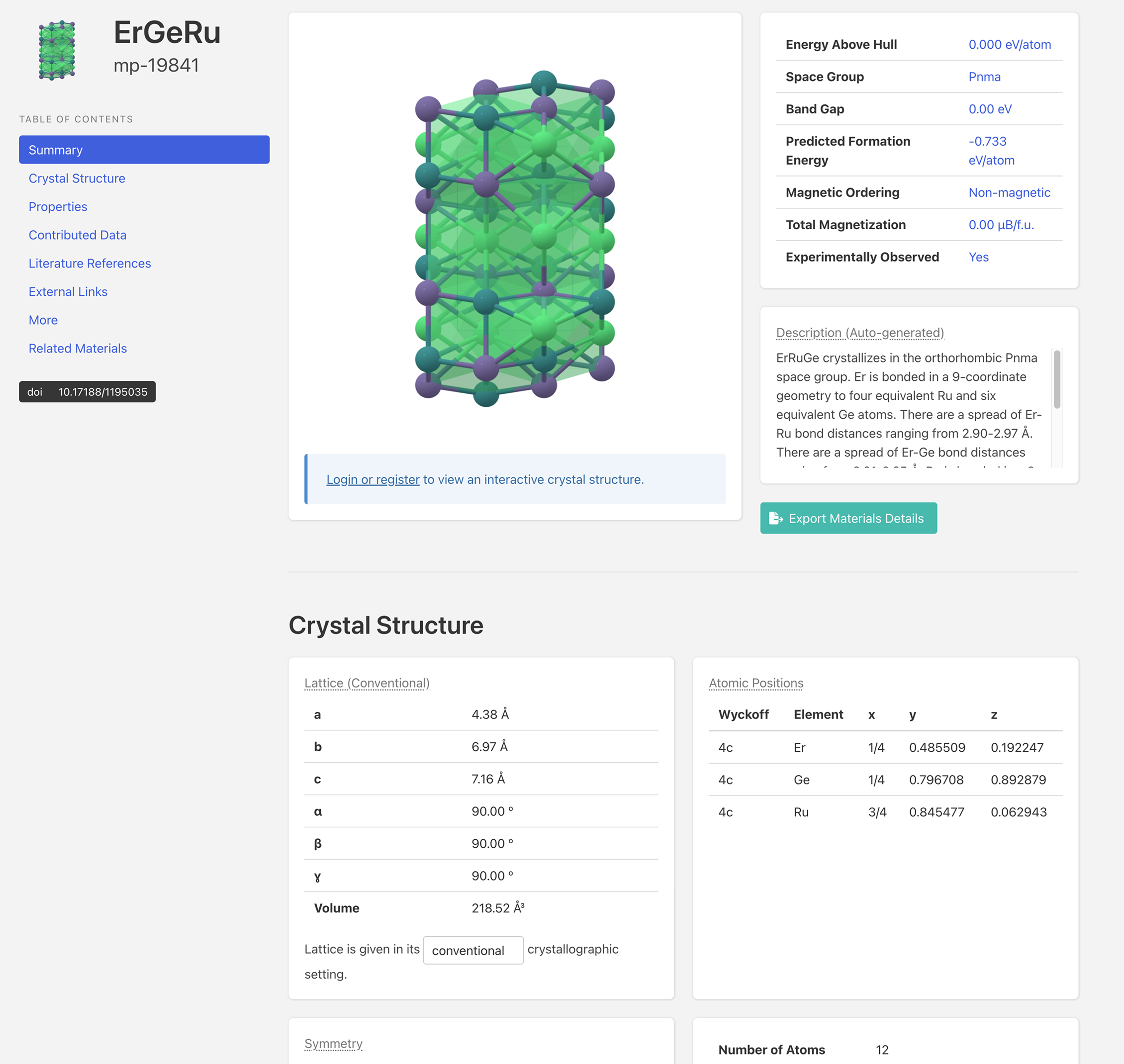
Material’s Project
How to display complex and detailed info on a compound
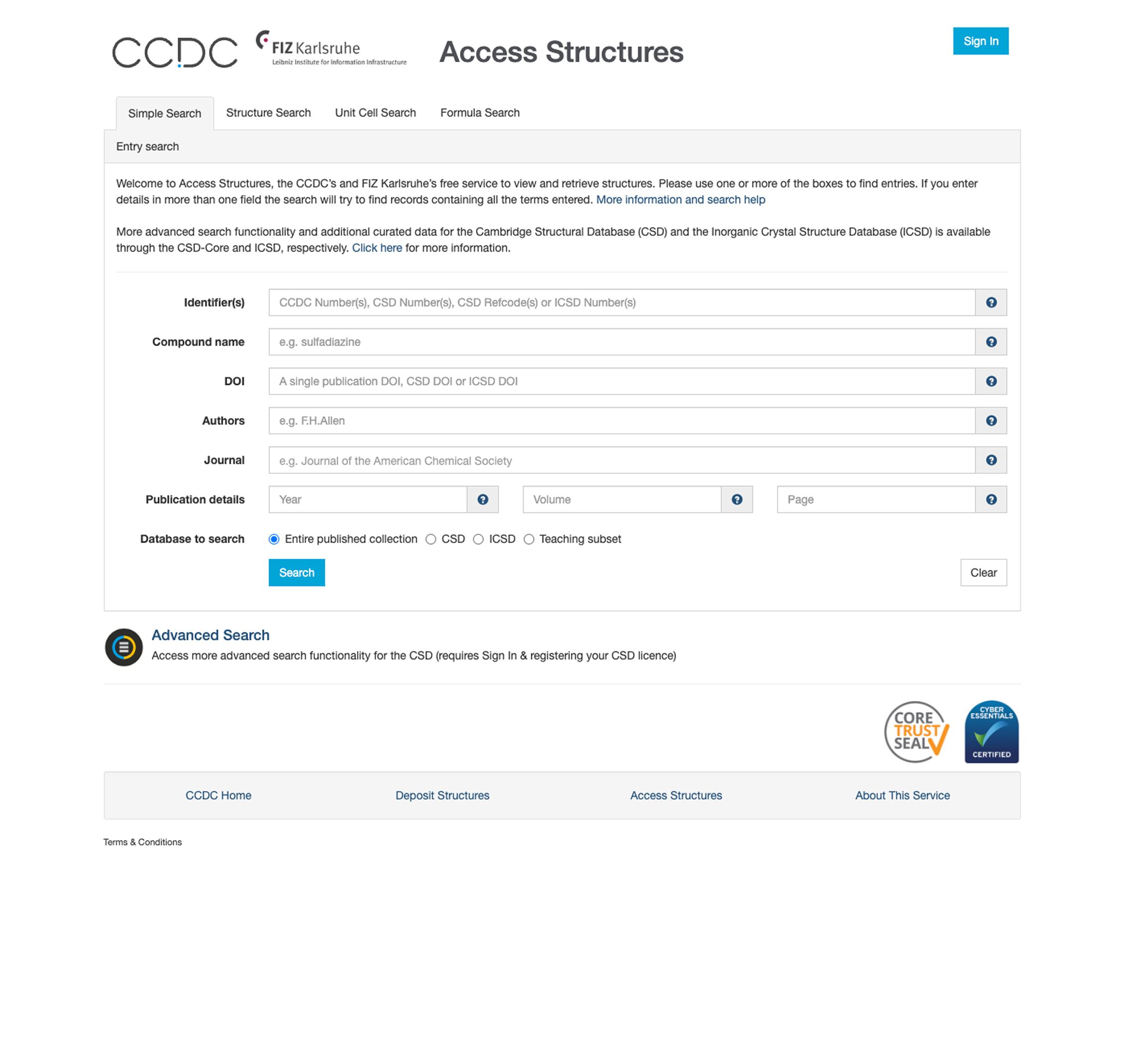
Cambridge Crystallographic Data Centre
Variety of search options & how to structure them
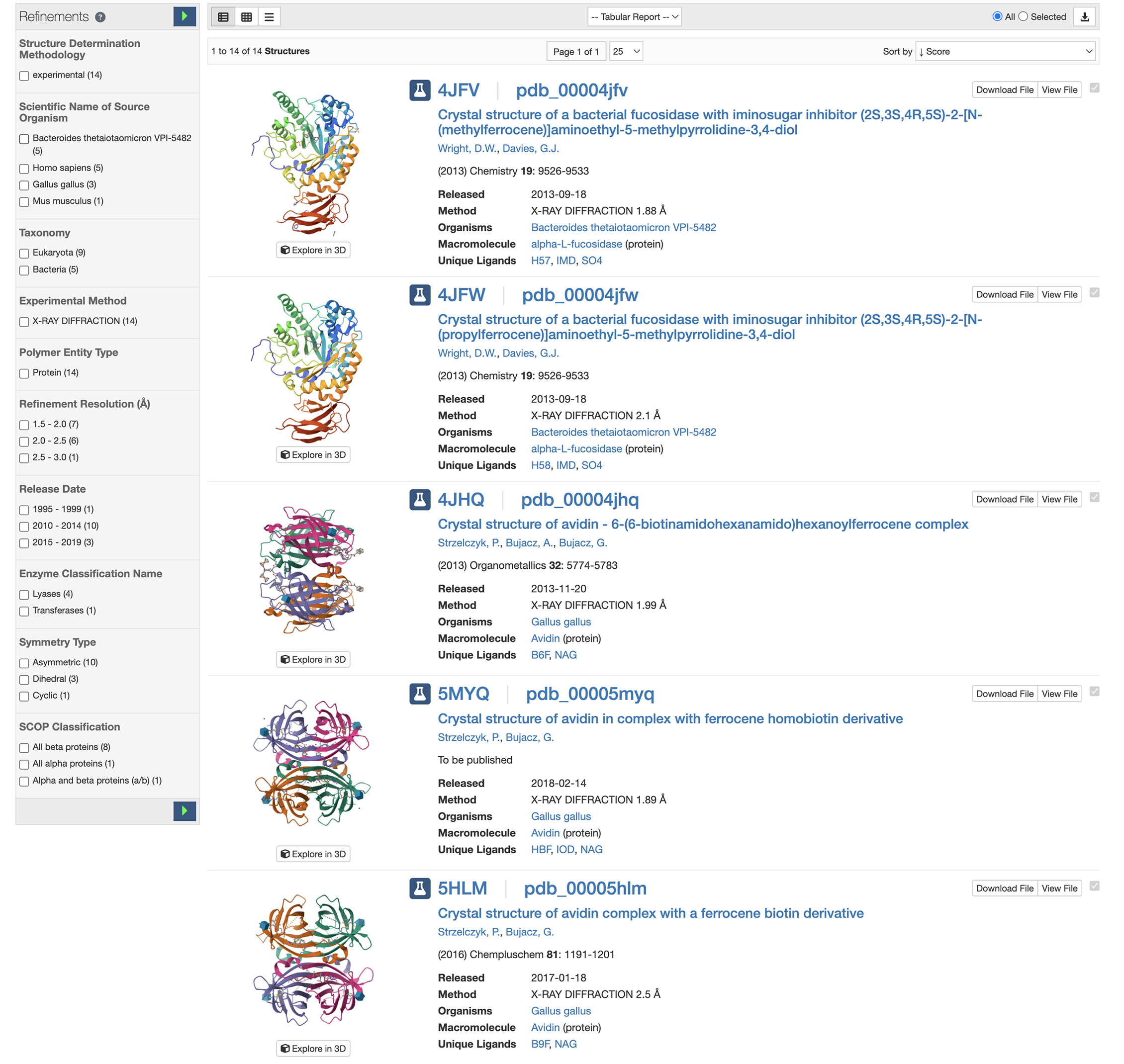
RCSB Protein Data Bank
How to display search results
Material’s Project
How to display complex and detailed info on a compound
Cambridge Crystallographic Data Centre
Variety of search options & how to structure them
RCSB Protein Data Bank
How to display search results
Priority Guide
Using priority guides, we worked with our stakeholders to quickly validate what content mattered most before jumping into wireframes.
Wireframing
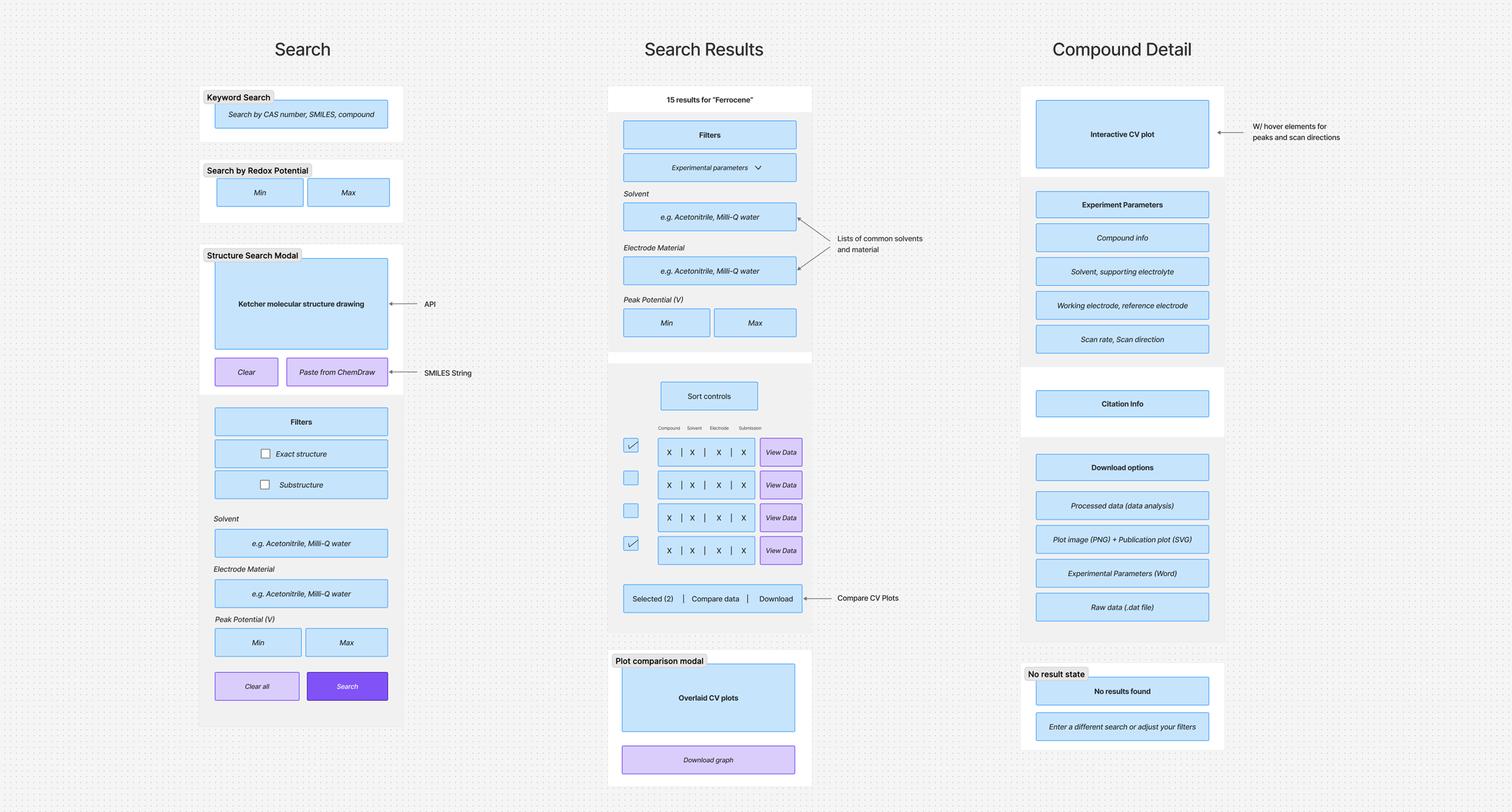
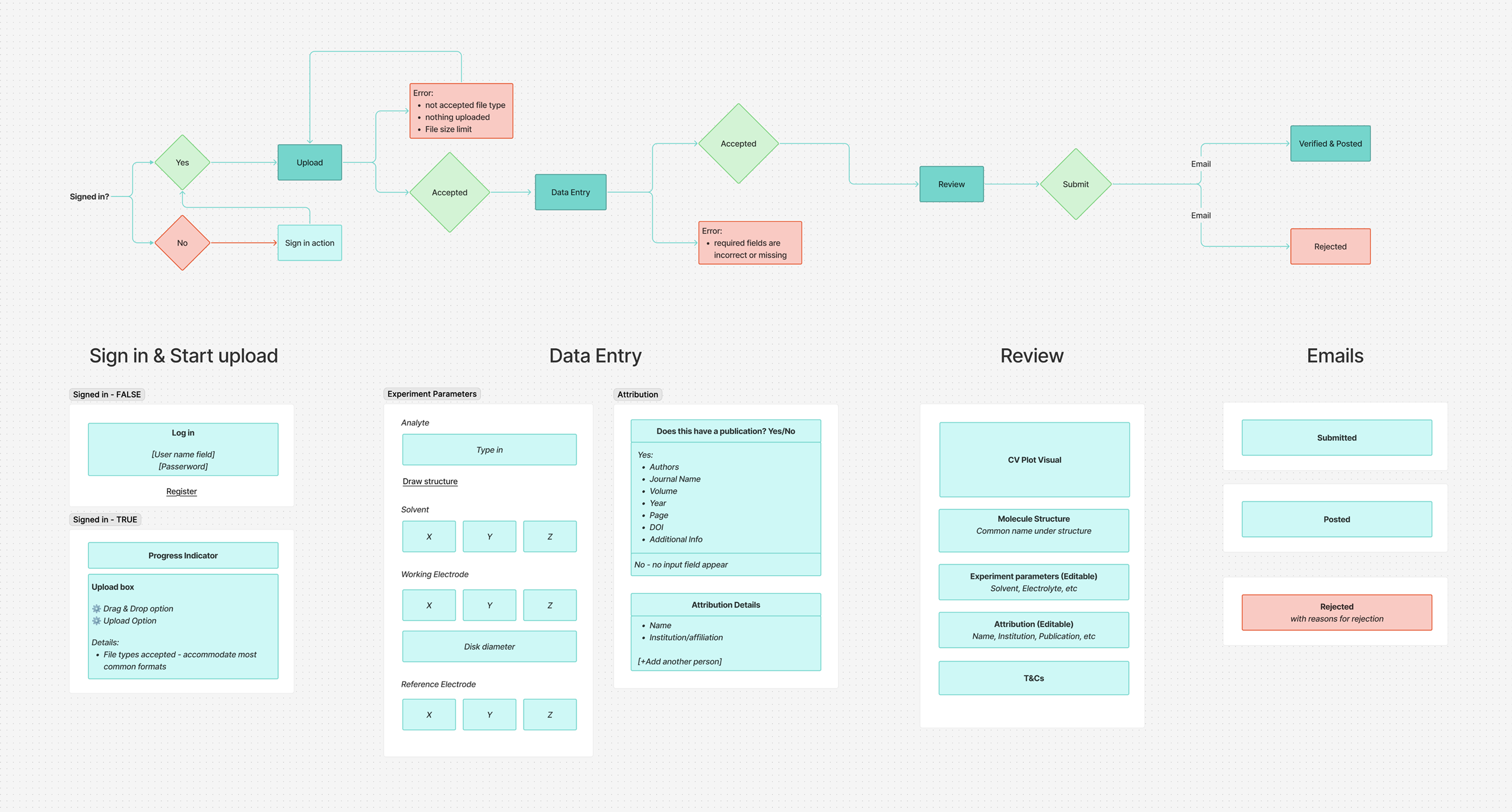
We put into wireframes key elements and interactions:
1. Three ways to search: Keyword, Structure, and Redox Property
2. Search results and filters
3. Search result detail
1. Upload file
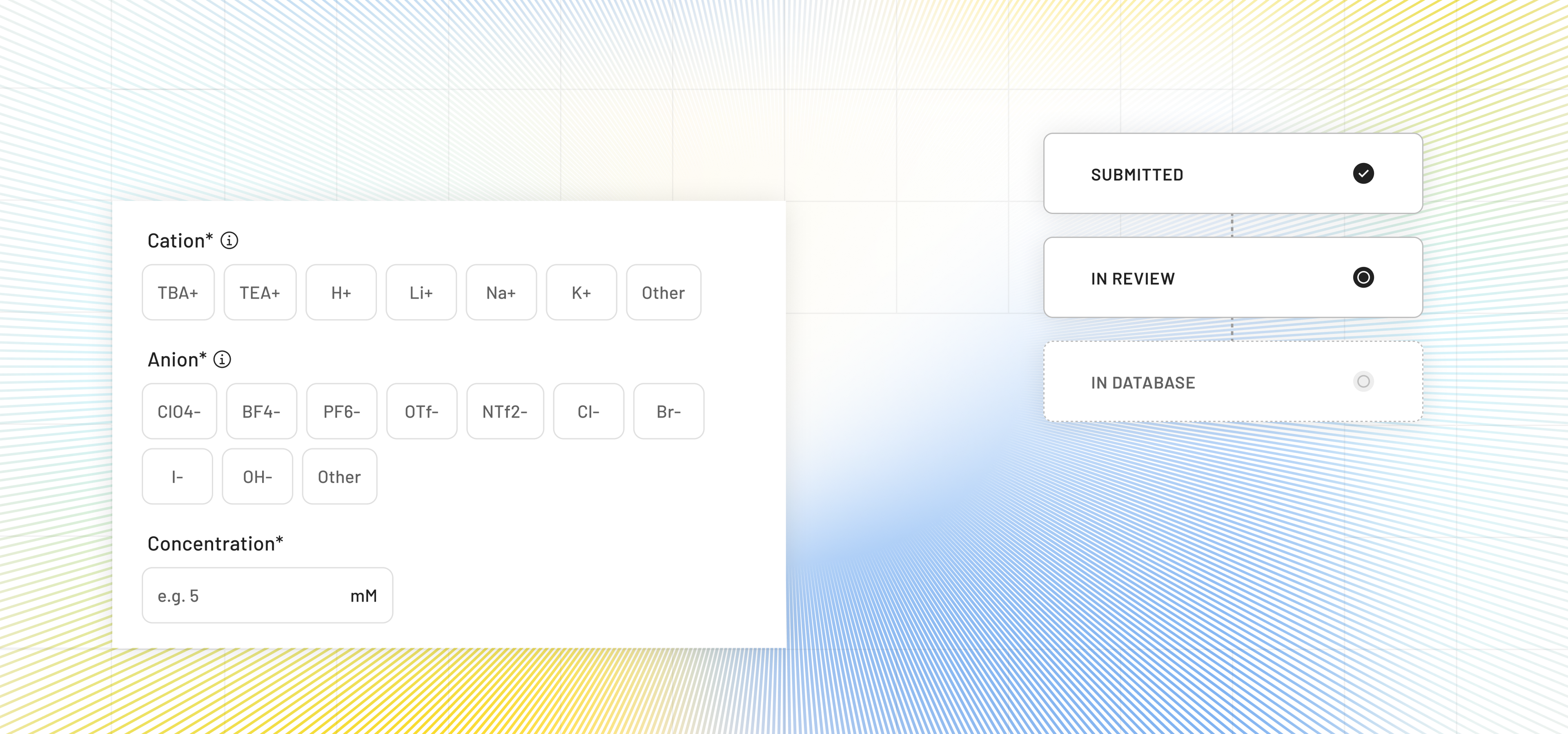
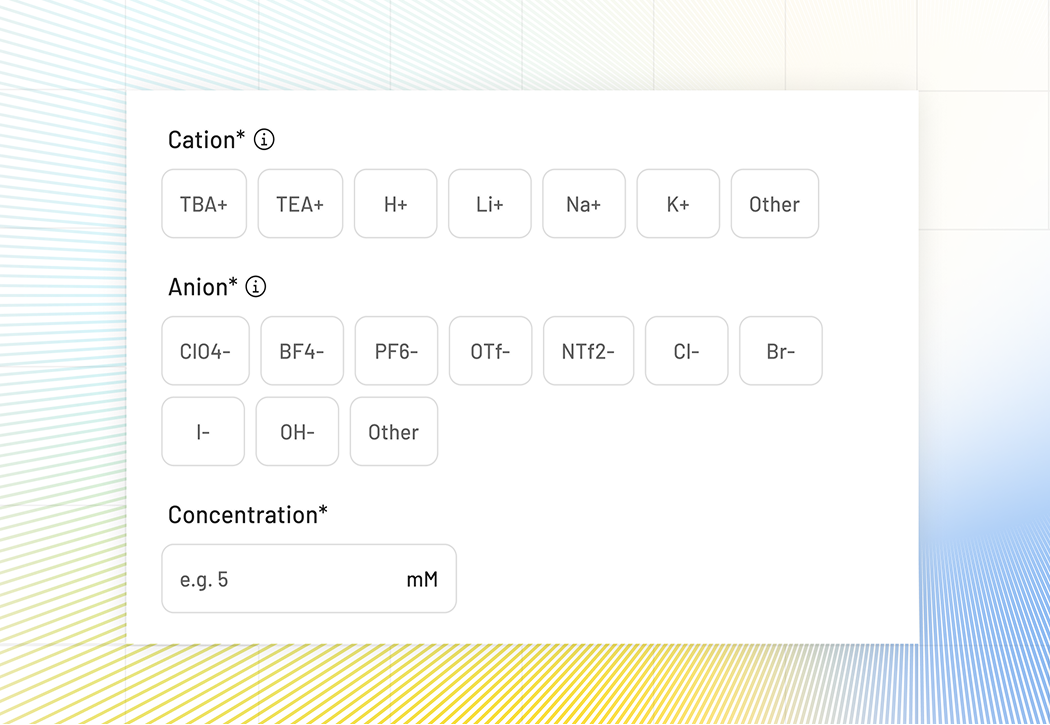
2. Experiment parameters
3. Attribution
4. Submission
User Testing
We tested our wireframes with users to achieve the following objectives:
🔍 Search
Validate that users can efficiently find CV data using multiple search methods
📊 Results
Validate that search results are clear, and users can compare multiple CV plots easily
📤 Data Upload
Validate that the upload process is comprehensive & easy to complete
📈 Data Visualization
Validate that CV plots are easy to interpret
Profiles
3 Men, 2 Women
Ages 25 - 55
Academic researchers
Familiar w/ CV experiments
Parameters
Qualitative
Self-paced via remote recording
Tasks-based testing w/ think-aloud protocol
🔍
Search
Search
carried out Search without difficulty
didn’t notice or click on “Search by Redox”
The icon for structure search is a bit small. Would also be good to include text to indicate that icon is structural search.
Song, Researcher
📊
Results
Results
found Filters clear & intuitive
requested changes to improve clarity of displayed results
I guess it would be good to know where this data is coming from, rather than the date.
Elya, Grad Student
The database ID is helpful, but if we’re comparing them, we’d want the compound name somewhere. Otherwise I can’t tell what’s what other than just the ID.
Joe, Grad Student
📤
Data Upload
Data Upload
appreciate “Fill from history” function
requested additional details to deepen experiment parameters
I really like the fact that if I want to upload the same setup for a CV, I could just use a drop-down menu from history.
Shannon, Student
What if there were more than one analyte or solvent?
Yi, Researcher
📈
Data Visualization
Data Visualization
requested accommodating multiple scan cycles & scan direction
In material sciences, people use multiple scans to indicate the different oxidative states of a substance is “stable” upon redox events.
Yi, Researcher
Scan direction. Yeah, it would be nice if we can show some small arrows here. That would be more clear, I think like we start from here and we do the back scan from here.
Joe, Grad Student
Design System
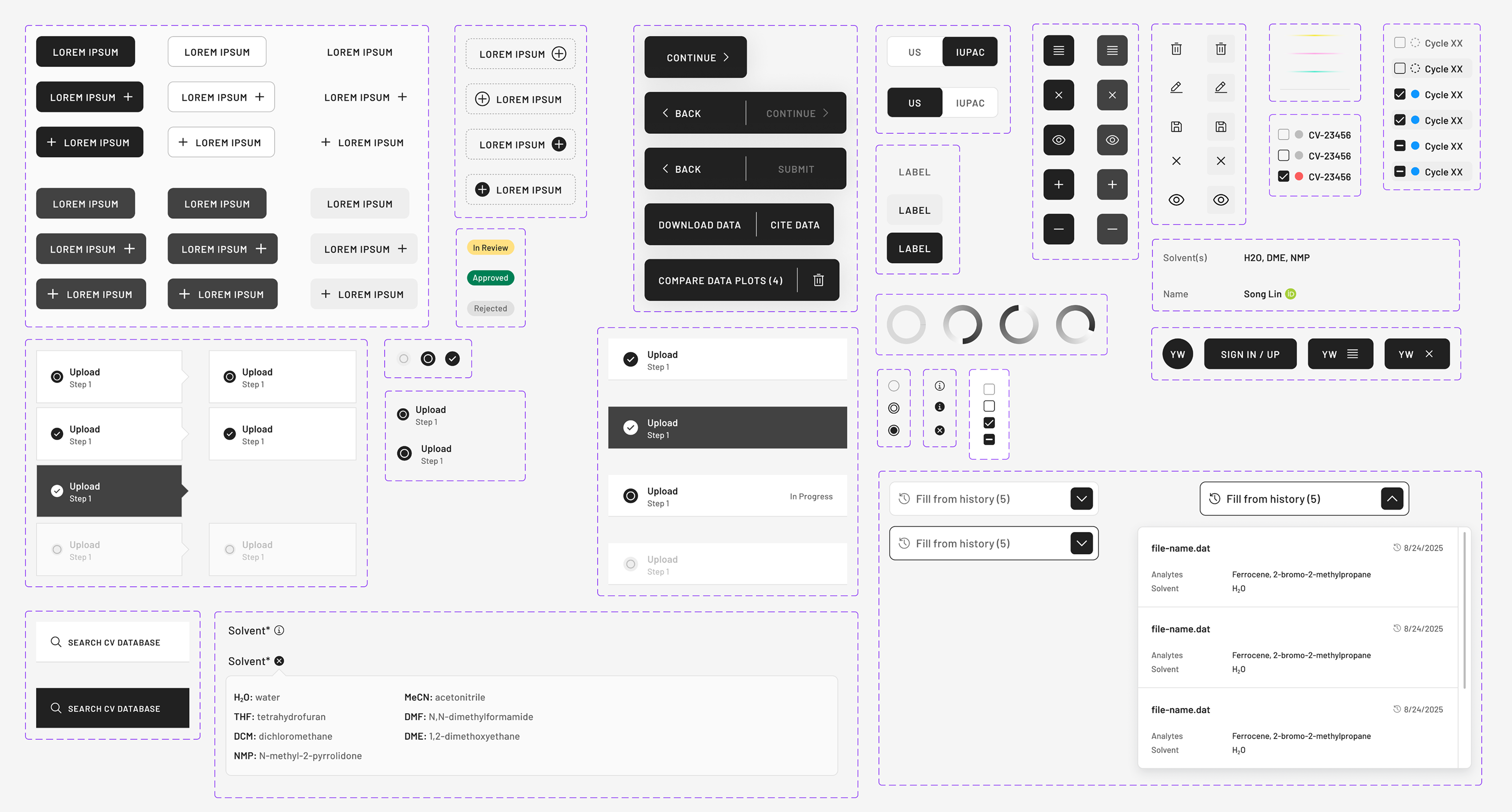
As we fine-tuned the UX, we also built the design system of the app, laying the groundwork for future components and product scaling.
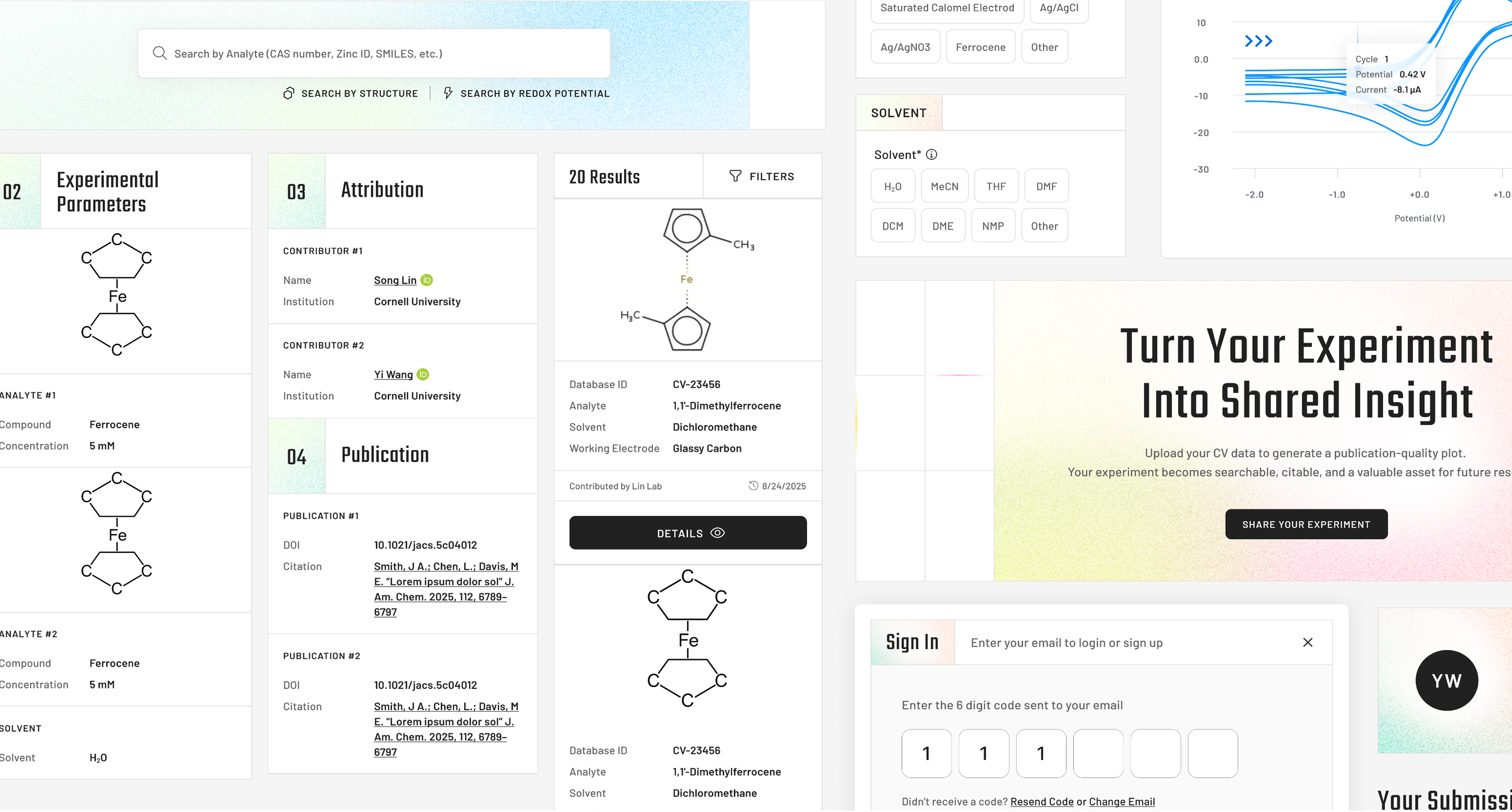
Final Design (Under Development)